How it works
Start with a drawer of paperwork. End with your home's history.
No inspection to book, no technician at the door, nothing to install. Your record starts with what you already have and keeps growing every time work is done on your home.

Four steps
From your first document to the next owner.
Bring what you have
Upload invoices, permits, warranty cards, an old inspection report or a photo of a rating plate. Anything that dates something counts. Most people start with two or three documents and add more as they turn up. A system with no paperwork can still go on the list, marked as stated by you.
Your record is built
Each document is matched to the system it belongs to by make, model and serial, across heating and cooling, water, electrical, the building envelope and the site. If a file cannot be read, the record names that file and says why.
It keeps growing
Invite the contractors you trust. They file their work to your record as they do it, signed, so your home's history keeps building without you typing anything. You decide who has access, and you can revoke it.
It goes with the house
When you sell, you review what will go, invite the new owner by email, and the record moves to their account when they accept. The home keeps its history. Your account details do not go with it; the documents filed against the home do, as part of its history. Before you send it, you see each document that will go, because an original invoice can show your name or address. Accepting it is free for the new owner.
Getting started
Three ways to begin. Pick whichever is easiest.
After you join, you choose how to start. You can skip and come back later; nothing has to be finished in one sitting.
What we read from a document is shown apart from what you tell us yourself, so you always know where a fact came from.

Your contractors
The people who look after your home keep the record current.
A visit filed by your contractor lands on the system it belongs to, with the date, the work done and who did it. Change contractors and the history stays with you.
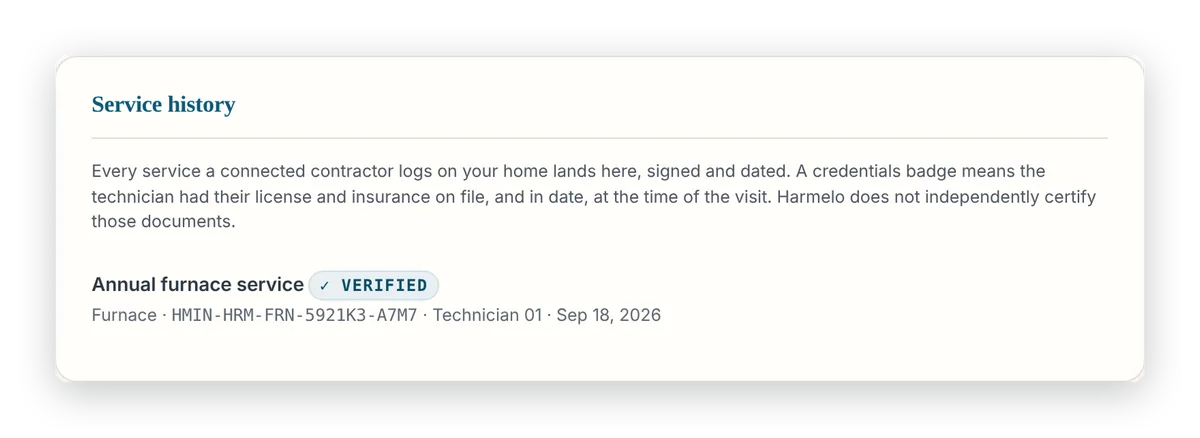
Contractors without a Harmelo account can still be invited from your record. Send your contractor an invitation.

Upgrades and replacements
Every upgrade adds to the story, and to the plan.
A new roof, a heat pump, a replaced water heater: each one goes on the record with its date, cost and warranty, and the planning ahead updates from it.

When you sell
Leave the next owner more than the keys.
The next owner receives the home's history: its systems, the work done on them and the documents behind them. They can keep it going with their own membership, and the house never starts over.
- You review what goes.Every document filed against the home is listed, and the ones that may show your name or address are marked. Nothing is sent until you confirm.
- You invite the new owner.The invitation works only for the email address you enter, only once, and it expires after 7 days.
- They accept.Accepting is free and does not need a membership. The home's record, its documents and its service history move to their account and leave yours.
- It is recorded.Harmelo keeps a record of who sent it, who accepted it and which documents moved.
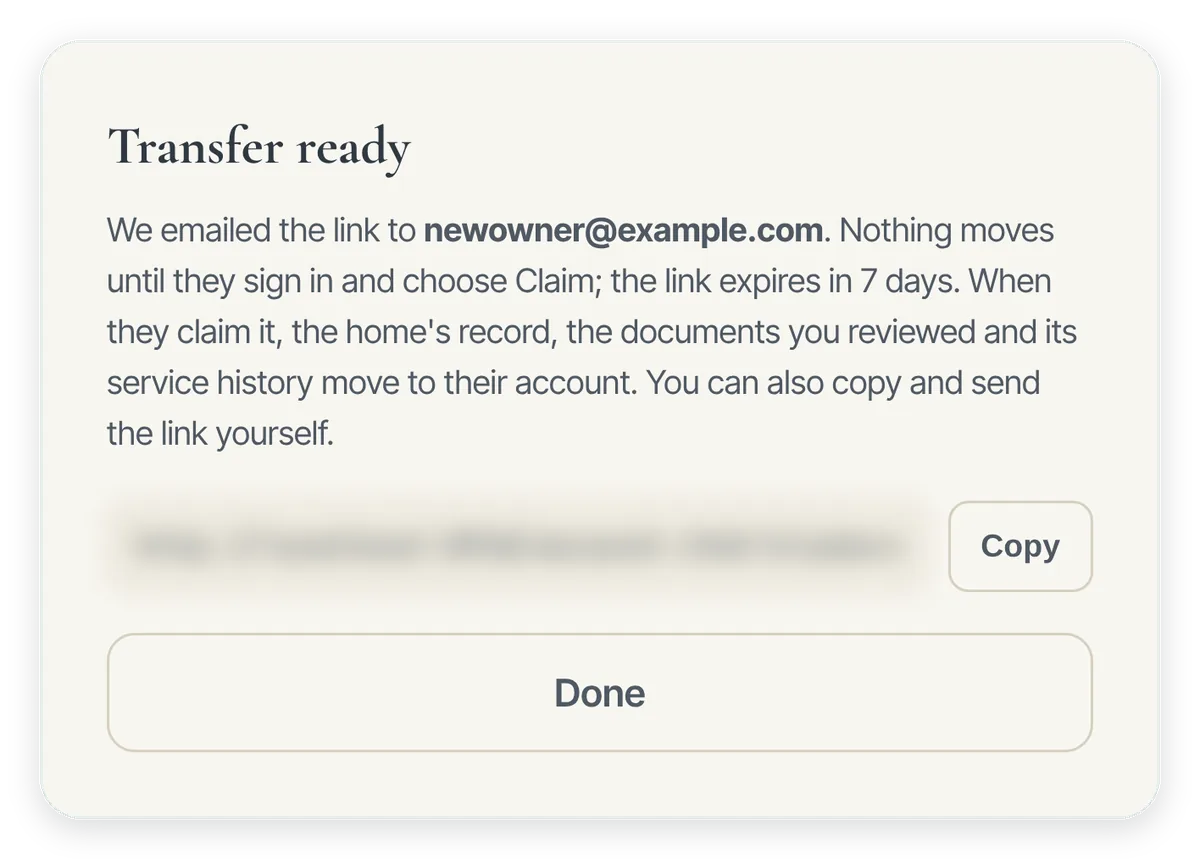
A new owner without a membership sees the transferred documents in their account, and the report may open in a limited view. A membership for the home, $29.99 a year, opens the full record and keeps it current.
Good to know
What Asset History Report is not.
Not an inspection
Nobody attends the property. The record reports what the documents on it say.
Not a service company
We do not schedule, dispatch, quote or perform work. That stays between you and the contractor you choose.
Not a valuation
The record describes the systems in a home. It does not price the home or certify its safety.
Asset History Report is built from the documents you and your contractors provide. It is a record, not an inspection, and nobody attends the property. Cost ranges and replacement planning windows are planning figures, each shown with its basis, to review alongside professional advice.